Rating:

My Ongoing Love for Anthologies …
My love for anthologies and short stories continues to deepen with time.
This year, I set a personal goal to explore more collections—particularly those rooted in Asian literature. There is immense beauty and sorrow woven into the lived experiences within the Asian sub-context, and immersing myself in these narratives has been both healing and cathartic. Stories written by Asian authors often carry a familiarity that resonates with the soul in quiet, profound ways.
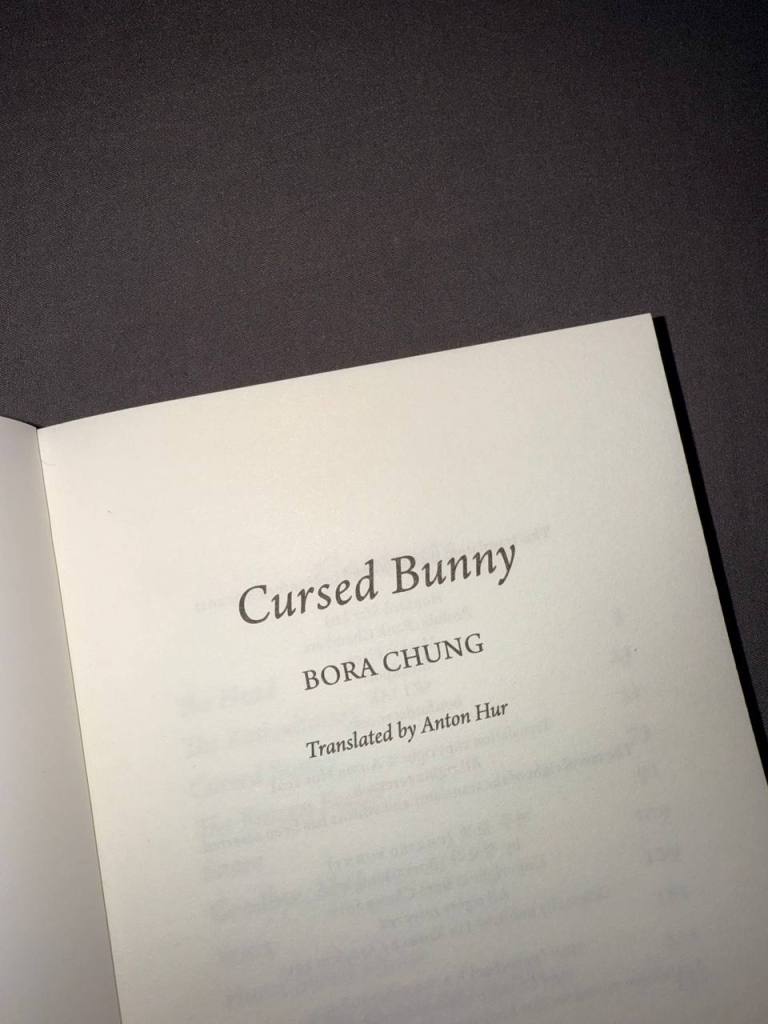
One quiet afternoon at Kinokuniya, I found myself browsing the shelves when I came across Cursed Bunny by Bora Chung. It didn’t take much—just the blurb on the back cover—to convince me to take it home.
The blurb reads:
“Cursed Bunny is a genre-defying collection of short stories by Korean author Bora Chung. Blurring the lines between magical realism, horror, and science fiction, Chung uses elements of the fantastic and surreal to address the very real horrors and cruelties of patriarchy and capitalism in modern society.”
Needless to say, I was intrigued—and this book quickly became one of the most riveting reads of my year.
Bora Chung’s storytelling is masterful. In essence, Cursed Bunny is a striking compilation of short stories that explore the harsh and often invisible realities women face in a world steeped in patriarchy and misogyny. While each story is unique in style and tone—ranging from magical realism and sci-fi to horror and the grotesque—they are all bound by a common thread: women and trauma.
What truly impressed me was the pace and pull of each narrative. I finished the book in under a week, and I believe even readers who are new to short stories could easily complete it within two. But don’t mistake that for simplicity—these stories are far from shallow. Rather, Chung’s writing is so compelling, so unpredictable, that it becomes nearly impossible to resist the urge to know what happens next.
I’ve always believed that crafting short stories is an art form in itself—it demands precision, clarity, and emotional weight within a limited space. Bora Chung delivers on all fronts. Her prose is haunting, her imagination vivid, and her themes unflinchingly honest.
This review captures some of my reflections for a few of the stories in this book (titles bolded below). If you’re looking for something bold, unsettling, and unforgettable, I hope this inspires you to pick up Cursed Bunny.
You won’t regret it.

- The Head (18 pages)
- The Embodiment (28 pages)
- Cursed Bunny (22 pages)
- The Frozen Finger (18 pages)
- Snare (18 pages)
- Goodbye, My Love (20 pages)
- Scars (52 pages)
- Home Sweet Home (30 pages)
- Ruler of the Winds & Sands (20 pages)
- Reunion (20 pages)
THE HEAD
This is a surreal and unsettling story that begins in the familiarity of a domestic setting but quickly descends into the bizarre. A woman discovers something strange emerging from her toilet—and what unfolds is a grotesque, yet strangely compelling, exploration of guilt, denial, and the lingering weight of unresolved trauma.
The reader is drawn into a world of eerie imagery and escalating dread, compelled to follow the protagonist through a narrative that grows increasingly uncanny. At its core, the story serves as a stark reminder that past mistakes have a way of resurfacing and that every action carries a consequence.
While the surreal elements may initially feel disorienting, the reader gradually acclimates to the strangeness—and in doing so, begins to see that the true absurdity lies not in the fantastical, but in the all-too-human choices and behaviors of the protagonist.
Without giving too much away, lines that lingered with me:
The young approached the old. Young, strong hands gripped old shoulders and neck.
THE EMBODIMENT
This is a surreal, Kafkaesque story that delves deep into themes of bodily autonomy, societal expectations, and gender roles. It follows a woman who undergoes a bizarre and inexplicable pregnancy, forcing her to question not only her own reality but also the rigid structures that dictate how women’s bodies should be understood and controlled. Blending horror with satire, the story offers a sharp critique of gendered norms—eschewing traditional plot structures to instead evoke disorientation, helplessness, and rage.
As the narrative unfolds, the reader is just as confused and powerless as the protagonist, drawn into her escalating despair. Like a silent witness, you can only stand by as she navigates her absurd reality, feeling her frustration and fury seep through the page. The emotional weight of the story lies not only in its strangeness, but in how uncomfortably familiar that strangeness feels.
There were moments in the story I couldn’t fully comprehend—but that was precisely the point. Life, especially for women, is often filled with disorienting, inexplicable moments that defy logic or fairness. And yet, we move forward. We endure.
This is certainly not a light read—but it is a powerful, necessary one.
My favourite lines from this story:
The middle-aged woman patted her back like she was her real mother. It was infuriating and she was indignant, but at the same time, the woman’s hand did feel like it was gently patting away the hurt. “I mean, that’s life,” the older woman went on to say.
CURSED BUNNY
In this standalone story, a family business specialises in crafting cursed charms—fetishes designed to inflict targeted harm. When a shaman-forged, bunny-shaped lamp finds its way into a powerful corporation, its effects are subtle at first, but ultimately devastating. The narrative unfolds like a dark fairy tale, blending supernatural dread with biting social commentary. At its core, the story takes aim at greed, corporate corruption, and the insidious forces that consume individuals from within. It offers a chilling mirror to how unchecked ambition can lead to real-world consequences.
Reading this story was truly an experience. From the very beginning, there’s a wealth of meaning to unpack, and readers will almost certainly be left with lingering questions. The ending, in particular, is unexpected and thought-provoking.
More than anything, Cursed Bunny urges readers to reflect on their own definitions of ambition. Where do we draw the line? At what point does the pursuit of success become self-destructive? In an era obsessed with productivity and power, these questions feel more relevant than ever. The story doesn’t aim to terrify—it aims to illuminate the ethical considerations we often ignore when chasing goals. It’s a haunting reminder of the moral compass we need, especially when navigating the cutthroat world of ambition.
Memorable lines from this story:
“So what happened next?” I ask. Of course, I know what happens next. The questions I ask when the storytelling stops in the expected places aren’t questions per se, but prompts for him to go on with the story, unwritten stage directions we have more or less come to agree upon.
GOODBYE, MY LOVE
This emotionally resonant tale explores the pain of saying goodbye to someone deeply loved. Through surreal, dreamlike sequences, it captures the way grief distorts time and space, blurring the boundaries between presence and absence. In this futuristic narrative, the protagonist struggles to part with his first android companion, Model 1. At the outset, he is consumed by sorrow over Model 1’s irreversible decline, wrestling with the realisation that the android may never operate as it once did.
However, the story soon veers into unexpected territory. What begins as a meditation on loss and nostalgia gradually transforms into something far more unsettling. The familiar ache of parting gives way to a creeping sense of fear as the protagonist confronts the unforeseen consequences of advanced artificial intelligence. Bora Chung masterfully shifts the tone—from tenderness to tension—revealing the uncanny potential of sentient machines and the emotional entanglements they inspire.
What makes this story especially compelling is Bora’s fresh perspective on human-AI relationships. Rather than focusing solely on the connection between a human and a single android, the narrative delves into the collective consciousness and emotional bonds shared among multiple companions. This layered approach challenges traditional notions of individuality, memory, and identity, and deepens the emotional complexity of the tale. It’s a poignant, unsettling, and thought-provoking exploration of love, attachment, and the evolving nature of what it means to be “alive.”
Striking lines from this story:
But no matter how many advanced models I brought home, Model 1 would always be my favourite. No matter how advanced and refined the subsequent models were, for me, all they amounted to, was work.
Model 1 is different. My first love. There’s nothing “artificial” about her; she’s my real companion.
REUNION
This tale centers on a meeting between two people from vastly different worlds, bound by a heavy, unspoken history and unresolved emotions. The narrative seamlessly blends eerie, uncanny moments with an intimate exploration of memory, regret, and emotional residue. It reflects on reconciliation and loss, evoking the quiet, haunting echoes of past relationships and the shadows time leaves behind.
The story opens with a poignant line: “This love story is for you.”
From the outset, we are drawn into what appears to be a heartfelt letter—an intimate monologue from a woman to a man. At first, the tone suggests a familiar romantic narrative, leading readers to expect a conventional tale of love between a man and a woman. But as the letter unfolds, it becomes clear that neither character is ordinary. What begins as a simple recounting evolves into something deeper and more mysterious, revealing lives shaped by trauma, resilience, and otherworldly experiences. This is not a typical love story—it is a meditation on connection, vulnerability, and the profound impact of shared pain.
As the woman reflects on their relationship, we begin to understand how their pasts shaped them, not only as individuals but also as partners. The letter is laced with contradictions: presence and absence, affection and resentment, closeness and distance. Their relationship is revealed to be a tangle of emotional complexities—at times nurturing, at times destructive—yet always deeply human. One of the story’s most striking qualities is its exploration of trauma—not just as a backdrop, but as an active force that distorts identity, complicates intimacy, and blurs the boundaries between self and other.
The woman’s letter is as much a reckoning with her own past as it is a tribute to their shared journey. It is through this reckoning that she finds a measure of clarity and growth.
In the end, the woman’s reflections raise a powerful, lingering question: Is the purpose of love not only to connect with another, but to come to better understand ourselves? Through love—in all its contradictions and imperfections—we come face to face with our most authentic selves. This story, though tinged with tragedy, paints a tender and haunting portrait of what it means to be seen, shaped, and ultimately transformed by another soul.
Multiple lines that touched my heart (in no particular order):
I could finally understand the horrific and cruel clarity of what he considered to be meaningful. The desperation and immense fear that your life, as well as the future to come, hinged on a moment.
Once you experience a terrible trauma and understand the world from an extreme perspective, it is difficult to overcome this perspective. Because your very survival depends on it.
Parents who destroy their children’s lives, who suck the life out of their children’s futures, not only for the sake of maintaining their own illusions but also to zealously expand them into the lives of their children—such parents can almost be understood from the perspective of obsession.
So, what next?
I hope this riveting collection has caught your attention and becomes your next read.
Books like Cursed Bunny deserve to be applauded for their raw, unflinching exploration of meaningful ideas and complex emotions. Bora Chung’s unique voice and bold storytelling leave a lasting impact, and I am genuinely looking forward to reading more of her work in the future.
 sinceRELY, GRACIA
Leave a comment